
Nandini Bedi shares with us her experience of the Marketing Mindset workshop held on 6 July 2022.
As a part of the SENSE CPD online events, Dr Malini Devadas – scientific editor and mindset coach – was invited to address members about a marketing approach for freelance editors. The session took the form of a short presentation of about 10-15 minutes, after which 45 minutes were devoted to a Q and A. As can be imagined, not only was it was well attended, but there was also a lot to discuss! In her short presentation, Malini focused on how to define the problem, a three-step approach to finding ideal clients and developing the confidence to grow one’s business without complicating life for oneself by giving in to thoughts that get in the way. The slides were shared with those who attended.
Marketing strategies already in use by SENSE members
Some of these are: a website as a means to communicating credibility and legitimacy, posts on LinkedIn and an email newsletter; directly approaching existing clients to inform/check/communicate – or in other words to let them know where you stand in terms of your availability and to remind them that you are there should they need an editor; and lastly, the importance of word of mouth.
Concerns
There were also concerns that came up. Is it possible in this day and age to market oneself if one is not into social media? While Malini herself is very active on social media (check her out on Facebook and Instagram), she does not propagate it as the best or only way. Her approach is to put plenty of content out there in the world, with the idea of reaching out to those who are not yet convinced of their need for an editor. It’s her way of making contact with this particular group, so that they, over time, get to see the value an editor would add to their writing, as well as why paying for this service is worth it. If one is not into social media, then the email newsletter referred to in the previous paragraph, or a request to satisfied clients to pass the message on to colleagues would work just as well. However, as a member pointed out, word of mouth works if one keeps doing the same thing, but in order to introduce a new service, social media would be more effective.
How does one present oneself if there’s more than one service on offer, especially if these are quite different to each other? In other words, how does one target different groups? Malini suggested segregating one’s services over different platforms, and/or clearly defining these as two separate entities on one’s website, (check out hers at mdwritingediting.com.au). And this leads to another question that came up about whether it is more effective to use one’s name or a company name – to which her reply was that she thinks most people who choose her do so because they remember her and her work and not the name of her company. Her homepage is worth looking at to get an idea of her approach.
How does one get one’s foot in the door of an institution? Ever thought of offering a free speech in which you present what you do? This is not that different to putting out content about what you do via social media and is therefore a useful strategy for those who aren’t into social media.
The message to take home
To my mind, a very important message that Malini had to give was not to overthink and procrastinate, but to get out there and reach out to as many people as possible with what’s on offer, in the way that suits one best. Start and be aware of what works and what doesn’t. Change strategies if necessary. Use trial and error to go forward. To her mind, just sticking it out over a period of brings rewards. Too many of us give up and that’s the pity. Persistence pays. In the end the ones who don’t give up reap the benefits over time and develop a marketing mindset.

UniSIG report: Kate Sotejeff-Wilson on social writing: ‘Call it a meeting’
At the UniSIG meeting on 1 July 2022, Kate Sotejeff-Wilson talked about her experience of social writing with academics. Kate is a translator and editor, and she also facilitates writing retreats.
Social writing, Kate explained, is when a group of people get together, either online or offline, to write. The writers set goals together, the facilitator tells the group when to start writing and everyone works on their own project until the facilitator tells them to stop. The group then discusses how the writing went.
Kate mentioned a few things social writing is not: a workshop, in that you don’t critique one another’s writing; a boot camp, in that support is more important than productivity; teaching, in that the facilitator is a peer; and a competition, in that the writers are companions rather than competitors.
Who might benefit from social writing? Anyone, said Kate. Academics come to her retreats but so too do creative writers, and they inspire one another. ‘Someone who’s not involved in your work can see things you can’t see yourself.’ Translators could also try social writing, she added, because it gives you the chance to find your own voice and separate your voice from the author’s.
‘Can the writers be writing in different languages?’ Joy Burrough-Boenisch asked.
‘Yes,’ said Kate. Her social writing retreats are in Finnish and English. ‘I’m like a flight attendant: I stand there and say, “Let’s start writing,” in both languages.’
Why might people want to try social writing? Time, space and community, said Kate. Social writing gives you time to focus and the space to create. And as a community you share a commitment to write. You’re away from distractions such as your phone, social media and email. You set a goal – Kate gave the example of 500 words – and share how it went afterwards. ‘You’ll be amazed how much you get done.’
Kate gave three examples of how to go about social writing: informal writing with colleagues, through a professional organization (eg, MET’s Humanities and Social Science special interest group) and structured social writing (eg, a retreat).
Then it was time to discuss the ideal location for social writing, whether online or in person is better and whether social writing would work in the Netherlands. Would people be willing to travel? Would they do as the facilitator says? Would they be willing to pay? Would it be a good idea to limit numbers?
Start small, was Kate’s advice, and find out what works. Start meeting online or in a café and move on to booking a venue if people are interested. For academics, one of the draws of social writing is being able to devote time to writing, away from other responsibilities like teaching and supervision. ‘Schedule social writing,’ said Kate. ‘Call it a meeting!’
About Kate-Sotejeff-Wilson
Dr Kate Sotejeff-Wilson translates from Finnish, German and Polish into English at KSW Translations. She also edits in English for academic and multilingual writers. She facilitates writing retreats online and in person at Ridge Writing Retreats. She was born in Wales and did her history PhD research in London, Berlin, Poznań and Warsaw. Now she is also a Finn and has lived in Finland since 2012. She is chair of Nordic Editors and Translators.


Suzanne Rietveld writes:
On 26 March 2022, I attended the online AGM to see what was happening at SENSE and to meet some of my colleagues. Someone mentioned that the new members seemed less active than expected. This was the moment that I wanted to contribute to the discussion. I explained that this reduced activity should be reviewed within the context of the Covid situation. I told the other members that I registered with SENSE in January 2020 and was eager to see what kind of people I would meet, and what options there would be to learn and interact with mindlike colleagues. All this was disturbed by several lockdowns and restrictions. So, the new members were not less active by choice but by the circumstances of the last two years.
I wanted to put my money where my mouth was and volunteered to host the Zuid Holland SIG on 31 May 2022, advertising the event with the great views from my apartment in De Rotterdam! The event needed a theme, so I decided to give the attendees some tips and tricks on subtitling. That was quite scary, I must confess. Providing the view and the catering was something I was used to, but preparing a talk about subtitling was a challenge because I am not used to speaking in public and I was not 100% sure that I was the right person to share my knowledge.
So, after the invitation was posted online and the first attendees started to sign up, I started to prepare my presentation. I assumed that most of the colleagues would not be experienced with subtitling, other than an odd job in Word, and that some of them would be familiar with the discussion about the specialized skills involved. I wanted to explain more about the technical side of the profession and started my presentation by explaining that my training consisted of a 10-week course of 2 hours per week at ITV Utrecht. So not something I could share within half an hour.
The main issue with subtitling is the fact that reading a sentence takes longer than listening to a sentence, leading to restrictions in reading speed and the number of characters per second. This, combined with a limit in characters per line, often leads to the need to compact the title's content without losing the conveyed message. I use Subtitle Edit myself and showed its settings such as characters per second (around 14–16) and the title's length (between 1 and 8 seconds and with a maximum of 40 characters per line).
I also explained that I prefer to 'spot' the titles by eye instead of by ear. I use the waveform that comes with every MP4 file to do so. The waveform is a graph that shows the speaker's volume and therefore is very useful to mark the start and end of a spoken sentence. Depending on the length and structure of the sentence, you decide how many titles you will need for this particular sentence.
We discussed the ways to shorten the titles, such as leaving out repetitions, stop words, adjectives, adverbials, quantifiers and introductory phrases. The conclusion was that we should only compact the title if this is really necessary. In the end, the afternoon went very well. We all fitted around my table (11 people) and enjoyed the cakes from the local bakery. We got to know each other better, and everyone seemed happy with the shared information.
The overall message was that a subtitle has to convey the right message, and the reader should be able to finish reading the title before it disappears off-screen. Yes, subtitling involves special skills, but don't be afraid to give it a go if a task comes up and offers some flexibility on time spent, and in the worst case, to ask a friend. I proofread and subtitle in English and Dutch ?

All together again: a summary of the SENSEMed workshop in Utrecht
On 11 June, after 27 long months of Zooming, SENSEMed members finally met in person in Utrecht for a one-day workshop on working with medical texts. Daphne Visser-Lees kicked off with a lively session on translating medical texts from Dutch into English. She explained which texts might need expert medical knowledge to translate (such as case reports and articles) and which ones probably don’t (leaflets for patients, medical insurance documents). She then led us through two translation exercises. The first highlighted common terminology issues we might face when translating medical texts from Dutch into English – for example, Hernia typically refers to a herniated or slipped disc in Dutch whereas it generally means an abdominal hernia in English. The second explained how to decipher and translate case notes from a Dutch GP (not always – or never – easy!). Daphne’s extensive medical experience serves her well when tackling these difficult jobs and we were all grateful for the opportunity to learn from her knowledge and expertise.
Sally Hill and Curtis Barrett were up next with their editing slam. Sally and Curtis had both edited an abstract from a medical research article and presented and explained their changes sentence by sentence. This was an engaging session with plenty of questions and input from the audience. Sally and Curtis had both improved the clarity and readability of the text with their changes – but they did not always agree on what changes were best. This session highlighted just how subjective editing can be and that there is never one right solution to a difficult sentence. It also highlighted how we need to be aware of changes in scientific style and keep in mind that our own preferences (such as whether to use the Oxford comma or italicize Latin words) may not align with the style guide our client has to follow. Sally and Curtis finished up by giving a useful summary of what they do before starting an editing project and before delivering an edited file, both of which involve careful and specific communication with the client. A very enlightening session overall.
After a tea break, Sally was up again to talk to us about medical writing. Sally moved from freelance to in-house work last year after accepting a job as a senior scientific writer for the biotech company Merus. The goal of her talk was clear: to make us aware that medical writing exists. Job done. She explained what kind of texts medical writers are typically asked to produce (broadly divided into regulatory writing and medical communications) and what skills a medical writer should have (writing skills, scientific expertise, document expertise, and project management skills). To highlight how important (and complicated!) project management can be for a medical writer, Sally led us through a short exercise where we had to list the things we would need to consider before developing a timeline for a proposed writing project. The session was informative and inspiring, and Sally may well have succeeded in recruiting some future medical editors into her fold.
The participants were all grateful to Curtis, Daphne and Sally for taking the time and trouble to organize such a great workshop. We were all delighted to see each other in person again and are looking forward to many more such events in the future!

SENSE’s Annual General Meeting (AGM) is always held at the end of March. It is when the Society’s members get to hear what the Executive Committee (EC), the Special Interest Groups (SIGs) and various volunteer teams have been up to. We approve the previous year’s finances, approve the budget for the coming year, thank outgoing EC members and vote in new blood. We also thank the other volunteers who have been offering their time and help – often behind the scenes. In pre-pandemic times, the AGM was also a great opportunity to meet new members and catch up with each other at the coffee machine outside the meeting room.
Whether or not you attended this year’s online AGM, if you’ve been paying attention you will know that I was recently elected as SENSE’s Chair. For me it’s a great honour and, since we did not have a dedicated chairperson last year, this will put the EC in a stronger position as it steers the Society out of the pandemic. I’m sure that, like me, many of you are keen to start meeting up in person again. In this, we will be ably assisted by the two other people just elected to the EC: Curtis Barrett as the new Treasurer and Maaike Meijer as the new CPD Coordinator.
Back in time
Becoming Chair has reminded me just how far I’ve come personally within SENSE. It seems not so long ago that I was new to the profession, very much in awe of the experience and knowledge of other SENSErs. Back in 2009, I had left my job as a biology teacher to become a freelance medical translator. I had no language or translation or editing qualifications, and precious little experience – I felt like such an impostor! Who was I to expect to be paid for translating or editing? Surely others were much better at it? What were other SENSE members going to think of someone like me?
First Forum post
It was not long after I joined that, with some trepidation, I posted my first terminology question on the members’ Forum, which in those days was an email-based system where your question got sent to the entire membership. I must have spent about three hours composing a 228-word email asking whether I should use the -ise or -ize spelling in translated textbooks for Dutch bilingual secondary schools. I was so afraid of making a mistake, or sounding stupid, or asking something so darned obvious I’d be laughed out of town. But of course, I needn’t have worried. Fourteen friendly SENSE members took the trouble to reply and offer their advice and opinions, which greatly helped me to decide – if you’re curious, I went with -ise spelling.
Increased visibility
At the time, although I was still very much a starter in the translation and editing world, this positive experience made me realize that other members might be more approachable than I thought. And with time, I also gained enough confidence to offer my own opinion on questions asked by others. In fact, a science-related question that I was able to answer led to someone asking me to help teach a course in scientific writing. That was the first of several such courses that I ended up teaching at Dutch universities, and all thanks to SENSE; not to mention all the other translation and editing work that came in through word-of-mouth referrals.
Don’t be shy!
Fast forward 13 years, and I’m no longer a starter and no longer a freelancer, but still a keen and active member of SENSE. Now I have made it all the way to Chair of the Society, I feel much less of an impostor. And in fact that’s my main message: if you’re new to SENSE and perhaps lacking in confidence, I want to encourage you to get out of your comfort zone like I did and connect with other members. The pandemic has naturally prevented in-person networking for a couple of years, but until that picks up again, you could consider posting something on our closed Forum, attending a SIG meeting, or volunteering your time for SENSE. That way, when you attend your first live SENSE workshop, not everyone will be a stranger. For introverts – or in fact for many of us who have been unable to attend professional events during the pandemic – it can be quite stressful to turn up not knowing anyone. And I’m speaking from experience.
Of course, as I’ve mentioned before, volunteering for a professional organization is an excellent way to network with others and showcase your knowledge and experience, which the Society will be glad to make use of. And if you are a freelancer or have your own business, it’s free marketing! You can read more about how I used networking to build my business in an article I wrote for SENSE back in 2016.
Back to in-person events
The newly composed EC is already hard at work. The first EC meeting is scheduled in the first half of April, with a more comprehensive meeting at the end of May. One of the topics we are already discussing is of course in-person meetings – where, how, and when we are going to get together as members of the Society. I sincerely hope that SENSE will soon be able to offer you a programme of both offline and online events. This includes the SIG meetings which are often a first point of contact for new members. If you are interested in setting up a new SIG or helping an existing SIG to arrange meetings, the EC is available to help in any way we can.
I hope to meet many of you in person sometime soon. In the meantime, if you have a question or would like to share your thoughts, do feel free to drop me a line at
|
Blog post by: Sally Hill LinkedIn: sally-hill-nl Twitter: SciTexts |
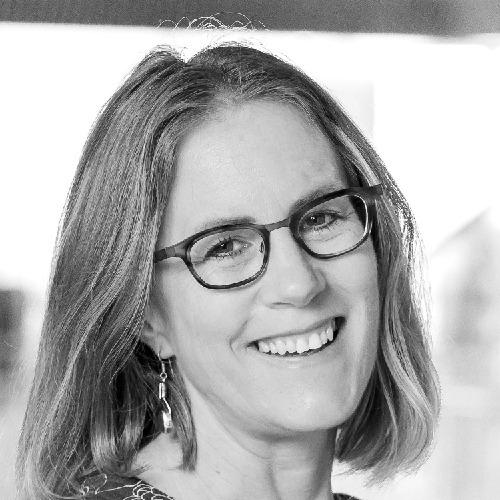

Over the past year and a half, Frans Kooymans has been working on what he calls his ‘corona project’ – the translation of All God’s Dangers by Theodore Rosengarten.
Frans writes: I picked up this big book (some 580 pages) back in 1975, when I was still living in the Southern US. It is the life story of Nate Shaw, an illiterate Black sharecropper who spent his entire life as a cotton farmer in Alabama. He was already in his eighties when Rosengarten, a young historian from the North at the time, happened to meet him while doing research on a defunct sharecropper’s union.
The old man turned out to be an amazing storyteller, with an even more amazing memory. In the years following, Rosengarten spent hundreds of hours with Shaw in the man’s shelter with his tape recorder, as Shaw unfolded numerous details of his long life in the cotton fields. All these stories were then transcribed, which led to the publication of the book in late 1974 (shortly after Shaw died at the age of 87).
I was fascinated with the book back then, but it sat in my bookcase until a couple of years ago, when I reread it and became fascinated once again by Shaw’s tales. And I decided that, in light of the heat of the Black Lives Matter movement and the attention also here in the Netherlands on our colonial and slavery past, it would be worthwhile to translate it into Dutch. Not an easy task, because the book is entirely in Shaw’s diction, the slang of the Southern states. I succeeded in locating Rosengarten, a professor of both Black and Jewish history at the University of Charleston in South Carolina, and proceeded with his full support.
I have now nearly finished the translation and (after a long and sometimes frustrating search) have found a publisher, ISVW, the Internationale School voor Wijsbegeerte. The book is scheduled to be published this coming fall. The title is likely to be De kleur van katoen.

At the 18 February UniSIG meeting, SENSE member Linda Jayne Turner talked about her experience working for clients in academia in Germany and the Czech Republic. A teaching job at Charles University brought Linda to Prague in 2004, and while she has remained there, she also has many clients in Germany, where she lived previously. She mostly edits journal articles written by academics to be submitted to journals (mainly in the social sciences); she also edits colleagues’ English translations from German and Czech.
In her talk, Linda touched on some of the differences between working for clients in the two countries. In general, she thinks her Czech clients are more diffident about their prowess in English and more relaxed about deadlines. Her German academic clients pay higher rates and expect to be invoiced per hour’s work (that’s generally equivalent to editing about 1000 words), whereas in the Czech Republic she is expected to charge per page (assuming 1800 characters per page), but can also charge an hourly rate in some cases. Her German clients often have to request bids from three language professionals, but don’t always go for the cheapest, preferring instead to give the assignment to Linda, whose work they trust and appreciate. Invoices issued to German universities should ideally be paid into German banks to avoid additional paperwork, so Linda has kept her bank account in Germany.
It seems that the bugbear in both countries is Kafkaesque bureaucracy. Although Kafka’s depiction of the Czech establishment arises from his own experience of the system in Prague imposed in the days of the Austro-Hungarian Empire, Linda thinks present-day German bureaucracy is even more convoluted.
Linda makes a point of visiting Germany several times a year, under normal circumstances, and when she does, she contacts her clients in advance to invite them to meet up with her. These informal meetings are usually at the end of the working day and take place in a café, restaurant or bar. Chatting over coffee, a meal or a drink is a good way to get to know more about clients and to get useful feedback from them. It also makes it easier to deal with any subsequent issues that might arise while working together.
At this lively UniSIG meeting there was plenty of input from the 24 attendees. It was pointed out that in Germany and the Netherlands, agencies corner editing and translation work through aggressive marketing, and the texts they supply to their university clients are sometimes in poor English. Linda’s mention of her arrangements for receiving payment from German clients sparked recommendations for companies to use for receiving payments from non-euro clients: PayPal, Wise (formerly TransferWise) and Stripe (cheaper than Paypal).

“Write about what makes you stand out in the field.”
“Show why the world should care.”
Tia Nutters and Hiske Feenstra, academic editors for the Talent Development (TD) programme of the University of Groningen (UG), shared these insights and much more at the UniSIG on 26 November. Twenty-seven SENSErs dialled in to learn about how the in-house TD editing team works and the kind of writing advice they give to applicants to increase the chances of their grant proposals getting funded.
The Talent Development programme serves to provide career-long support to academics, from PhD researchers to Nobel Prize winners. The TD team has its own management and support staff, including five editors and two trainers who collaborate on applications for personal grants, ie, NWO Talent Programme (Rubicon, Veni, Vidi, Vici) and European Research Council (ERC Starting, Consolidator, Advanced), as well as nominations for prizes and memberships. The SIG session looked at personal grants.
With the TD editors focusing on proposal texts and the trainers providing training in writing and interview skills and individual coaching, their support spans the entire application process: idea collection > proposal strategy > content (structure, organization, logic, argumentation) > proposal set-up > final proposal (language edit) > rebuttal > interview.
Once a call for proposals has been sent out to the UG faculties, the editing team know they won’t be able to support every application. They therefore set a cap and the faculty funding officers identify the most promising candidates within their faculties for TD support. The team then divide the work and provide two substantive editing rounds, if time allows, followed by a final language edit which is usually done by a second editor. The ideal length of support is 3 to 4 months, but this can be as little as 4 weeks.
Tia and Hiske showed some extracts of proposals they received and the advice they gave. Their approach is most often to shift focus, for example:
| From: | To: |
| Information reporting, ie, a chronological report of what the scientist did. | Looking ahead and telling the reviewers what this proposal means for the world. |
| Being too general in describing the scientific and/or societal impact of the proposed project or being obvious about the project’s “commercial viability”, which could imply making a profit (knowledge utilization section of NWO grant applications). | Explaining how the project will make sure the impact will happen (impact plan) and how the project will track other potential impact the project might yield (eg, a network, a warning mechanism). If relevant, focusing on commerce as a contribution to societal impact rather than an end goal. |
| Writing generic statements, especially in the academic profile, that can apply to anyone. | Avoiding list-like chronologies. Writing statements that make the candidate special. Emphasizing how a result happened or an achievement was made. Looking ahead, eg, what the applicant’s mission and vision are. In other words, selling! |
| Focusing on negative emotions or experiences in rebuttals. | Positive messaging, eg, how they addressed a challenge, what they could do further, what they learned and changed. |
As is often the case, editing is a balance between the time available and the scope of changes to propose – making changes directly, making suggestions for revisions or rewriting an entire paragraph/section.

UniSIG’s last meeting of 2021 (10 December) was a presentation by Fiona Richards, a 3rd-year PhD student at Sheffield University (UK). Whatever the many downsides of the pandemic, one of the benefits is the increasing geographical spread of SENSE members able to attend our presentations on Zoom. On this occasion, for example, members from the Netherlands were joined by members from countries as far afield as South Africa and Finland.
Fiona’s field of study is Teaching English to Speakers of Other Languages. Her research, supervised by Nigel Harwood (speaker at a previous UniSIG meeting), involves investigating proofreading practices at a UK university from the perspectives of L2 (English as a second language) students, proofreaders and lecturers. The aim is to determine the extent to which proofreaders can help students improve their English writing, while simultaneously adhering to proofreading guidelines intended to uphold academic integrity. As Fiona explained, her interest in proofreading practices at a tertiary level stems from her background in teaching pre-sessional courses in which she has seen the challenges faced by L2 students producing written work for assessment.
During her presentation Fiona discussed the preliminary findings from the interviews she held with a student writer (high IELTS score), the student’s proofreader, a senior lecturer and a retired senior lecturer, followed by a brief discussion of the implications of her data and their bearing on university proofreading guidelines.
Her focus was on how they viewed the ethical appropriateness of the following types of proofreading interventions made to the student’s thesis:
- additions (1-5 words);
- deletions;
- substitutions (one word for another);
- reordering (word order);
- structural editing (eg, moving paragraphs);
- rewriting (advising changes to meaning and content);
- mechanical alterations (eg, adding italics, punctuation, applying conventions).
The post-presentation discussions covered issues familiar to many SENSE members, including:
- The continuing confusion between proofreading and copy editing;
- Differences between writing acceptable for assessment and writing acceptable for publication;
- ‘Mixed messages’ from lecturers who sometimes seem hostile to students genuinely wanting to improve their English by having their work revised by a language-editor/coach. In this respect, the guidelines for students are sometimes unclear;
- Affordability of editing: although universities may provide writing advice services, students are not always aware of them, and not being able to afford a professional editor can put students at a disadvantage;
- Whether proofreaders should explain their proposed changes (by inserting a comment, for example) or just make the change;
- Dangers of overzealous proofreading (‘doctoring the evidence’ or ‘silencing the author’s voice’).
Fiona hopes to complete her PhD in the coming year and in future to investigate a wider range of student work, including work by students with lower levels of English as a foreign language. We wish her all the best.

As a professional wordsmith, you of course know what shortcuts are. You are probably using some in your daily work, like CTRL+S to save your work or CTRL+Z to undo whatever you shouldn’t have done. Chances are that you have considered the many more out there that you should be using.
Indeed, you really want to use keyboard shortcuts as much as possible, because they help you work more quickly, make your work easier and they reduce the risk of RSI from swinging that mouse around. No wonder most software programs include many handy shortcuts – Microsoft Word alone includes over 200 of them. But memorizing hundreds of shortcuts is quite a daunting task, so how do you know which ones are really worth remembering?
Luckily, Linda Comyns was so kind as to explain which Word shortcuts she finds most useful as a translator, an editor and a teacher. Attendees of this online SENSE event were encouraged to try out the different shortcuts in their own files and they were exuberant about their new editing superpowers. Below are my personal favourites:
I was delighted by the discovery that I can move to the next word to the left or to the right of the cursor or move up or down a paragraph using CTRL+arrow keys. That is decidedly easier than moving one character or one line at a time without the CTRL key. Similarly, Shift+CTRL+arrow keys will select words or paragraphs in the desired direction. When I try to select bits of texts with my mouse, I usually ended up selecting more or fewer words than I intended. Using Shift+CTRL+arrow keys to select the text before cutting (CTRL+X) and pasting (CTRL+V) it are real timesavers for me.
If you need to do a lot of formatting in Word, you will find CTRL+B, CTRL+I and CTRL+U very helpful to put words in bold, italics or to underline them. Removing all the manual formatting could not be easier than hitting CTRL+Spacebar. Do you need a heading? ALT+CTRL+1/2/3 will apply heading style 1, 2 or 3 in no time.
Naturally, you can do all these things with your mouse, but once you get the hang of it, using the mouse suddenly feels very cumbersome indeed. Although a few shortcuts are fairly universal, not all of these will work across Office applications or on other operating systems. Mac users can try the Command or Alt key, press Shift+Command or look up the Mac-specific keyboard shortcuts they need.
I was not the only attendee who learnt something new that day; many members and non-members got excited about these new ways of working. Some members even spontaneously shared their own favourite productivity tips.
Of course, we could not possibly round off a Southern SIG meeting without appointing the southern-most attendee as Southern SIG Member of the Month. This highly coveted honour was bestowed on Nina Woodson this time, who joined us from Los Angeles, USA – congratulations, Nina!


